
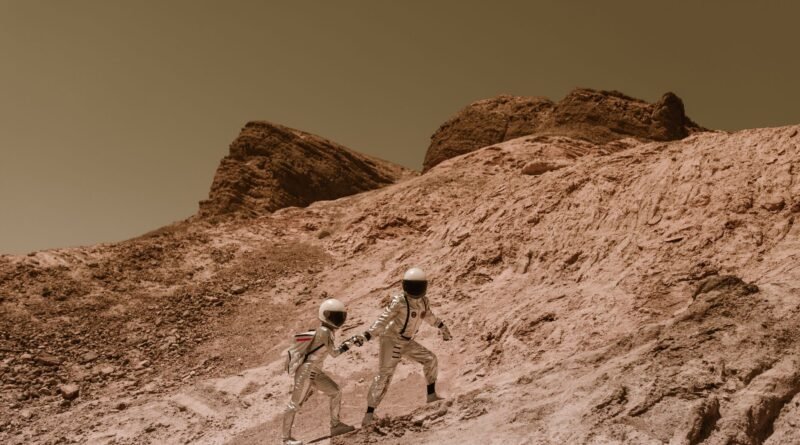
Martian moon mission: The Best Proven Steps for Success
The Martian moon mission is an exciting initiative that aims to explore the moons of Mars, offering new insights into our solar system.
Overview of the Martian Moon Mission
The upcoming Martian moon mission represents a significant milestone in space exploration, aiming to unlock the mysteries surrounding Mars’ two moons, Phobos and Deimos. Scheduled for launch on Tuesday, this mission is spearheaded by Japan, showcasing the nation’s commitment to advancing its space capabilities.
This initiative is not just about studying the moons themselves; it also paves the way for future interplanetary exploration. The mission will utilize state-of-the-art technology and methodologies designed to ensure success. Key objectives include:
- Sample Collection: The spacecraft is expected to collect surface samples from Phobos, which could provide insights into the moon’s composition and origin.
- Data Gathering: High-resolution imaging and analysis will be conducted to study the moons’ geological features and their interactions with Mars.
- Preparation for Future Missions: This mission lays the groundwork for potential human exploration of Mars and its moons.
With international collaboration and innovative engineering, the Martian moon mission aims to expand our understanding of the Martian system. As the launch date approaches, anticipation builds within the scientific community and among space enthusiasts worldwide.
Importance of Mars Exploration
The exploration of Mars and its moons holds significant importance for several reasons. First, understanding the Martian moon mission contributes to our broader knowledge of planetary formation and evolution within our solar system.
By studying these celestial bodies, scientists can gain insights into the processes that shaped not only Mars but also other planets and their natural satellites.
Furthermore, Mars exploration is vital for future human colonization efforts. The findings from Martian moon missions could provide crucial data on the availability of resources such as water and potential habitats for human life. This information is essential for planning long-term missions and establishing a human presence on Mars.
In addition to scientific and exploratory goals, the Martian moon mission fosters international collaboration. Countries around the world are investing in space exploration, and joint missions can lead to shared knowledge and technological advancements. This cooperation is crucial in tackling the challenges of deep space travel and understanding the cosmos.
Lastly, the public interest generated by missions to Mars and its moons inspires the next generation of scientists and engineers. Engaging young minds in space exploration can lead to innovations that benefit life on Earth and beyond.
Japan’s Role in Space Technology
Japan has increasingly established itself as a formidable player in the field of space technology, particularly with its upcoming involvement in the Martian moon mission. The Japan Aerospace Exploration Agency (JAXA) is poised to launch its innovative spacecraft designed to explore Phobos, one of Mars’ two moons, which is rich in scientific potential.
JAXA’s mission aims to gather crucial data that could enhance our understanding of the Martian moons and their formation, as well as their relationship to the planet itself. Key aspects of Japan’s role in this venture include:
- Advanced Technology: JAXA has developed cutting-edge propulsion systems and robotic technologies that enable precise navigation and landing on Phobos.
- International Collaboration: The mission involves partnerships with various space agencies, showcasing Japan’s commitment to global cooperation in space exploration.
- Scientific Research: The data collected from the Martian moon mission could provide insights into the origins of the solar system and potential resources for future missions.
As the launch date approaches, many are eager to see how Japan’s expertise will contribute to the success of the Martian moon mission, marking a significant step forward in humanity’s exploration of Mars and beyond.
What to Expect from the Mission
The upcoming Martian moon mission promises to be a groundbreaking endeavor for scientists and space enthusiasts alike. As Japan prepares to launch its mission, there are several key aspects to anticipate.
- Scientific Discoveries: The primary goal of the mission is to collect samples from Phobos, one of Mars’ moons. These samples could provide invaluable insights into the formation and evolution of our solar system.
- Technological Advancements: The mission will showcase cutting-edge technology, including advanced robotics and autonomous systems designed to navigate the Martian environment.
- International Collaboration: Japan’s Martian moon mission involves cooperation with various international space agencies, highlighting the importance of global partnerships in space exploration.
- Public Engagement: Anticipated broadcasts and online content will allow the public to follow the mission closely, fostering a deeper interest in space science.
As the launch date approaches, excitement builds around the Martian moon mission, which could pave the way for future exploration of Mars and beyond. With each successful step, scientists inch closer to unraveling the mysteries of the cosmos.
Future of Martian Exploration
The future of Martian exploration is poised to be exciting and transformative, particularly with the upcoming Martian moon mission. This mission represents a significant leap forward in our understanding of Mars and its moons, Phobos and Deimos.
As nations collaborate and share resources, the pursuit of knowledge about these celestial bodies becomes more achievable. Future missions are expected to incorporate advanced technologies, allowing for:
- In-depth Analysis: The collection of samples from Martian moons may provide insights into the origins of the moons and their relationship with Mars.
- Life Detection: Investigations could reveal clues about potential microbial life and the habitability of the Martian environment.
- Resource Utilization: Understanding the materials available on these moons may pave the way for future human exploration and colonization efforts.
Moreover, the Martian moon mission could serve as a stepping stone for deeper exploration of the solar system. By learning to navigate and operate in the vicinity of Mars, space agencies will gain valuable experience for future missions to more distant targets, such as asteroids or even the outer planets.
As technologies advance and international partnerships strengthen, the potential for groundbreaking discoveries in Martian exploration continues to grow.
Photo by RDNE Stock project on Pexels