
NASA Voyager 1: Best Proven Discoveries in Space Exploration
NASA Voyager 1 has reached one light-day from Earth, a remarkable achievement that highlights the ongoing journey of humanity into the cosmos.
Introduction to NASA Voyager 1
Nasa’s Voyager 1, launched on September 5, 1977, has become one of humanity’s most significant achievements in space exploration. This spacecraft was designed to explore the outer planets of our solar system and has far exceeded its original mission parameters. Traveling over 14 billion miles from Earth, Voyager 1 is now over one light-day away, venturing into interstellar space.
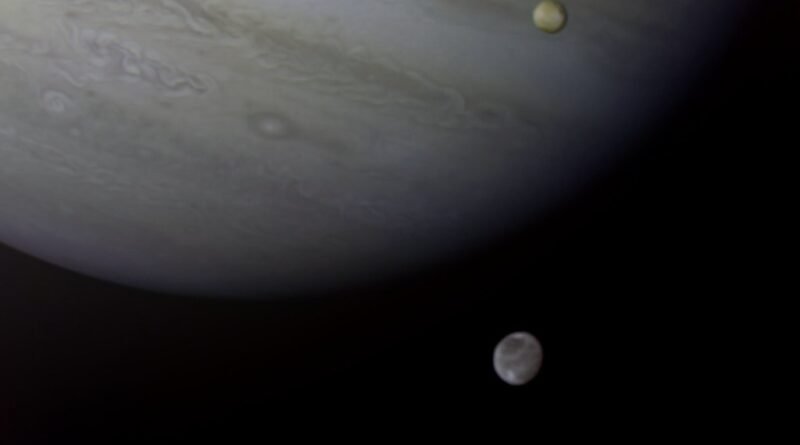
The journey of Voyager 1 has provided invaluable data about our solar system and beyond. Its primary mission was to study Jupiter and Saturn, and the findings from these gas giants have reshaped our understanding of planetary science. The spacecraft sent back stunning images and detailed information about the atmospheres, rings, and moons of both planets.
Moreover, Voyager 1 has continued to communicate with NASA, relaying scientific data even as it travels further from our planet. This has made it not only a remarkable engineering feat but also a critical tool for researchers in various fields. Its instruments have detected cosmic rays, magnetic fields, and plasma waves, contributing to our understanding of the interstellar medium.
- Launch Date: September 5, 1977
- Distance from Earth: Over 14 billion miles
- Current Status: In interstellar space
As NASA Voyager 1 continues its journey, it remains a symbol of exploration and discovery, inspiring future generations to look beyond our planet.
Milestones in Space Exploration
The journey of NASA Voyager 1 has marked significant milestones in the realm of space exploration, providing invaluable insights into our solar system and beyond. Launched on September 5, 1977, Voyager 1 has ventured farther than any other human-made object, reaching a distance of over 14 billion miles from Earth.
Among its groundbreaking discoveries, Voyager 1 made remarkable observations of the outer planets, including:
- Jupiter: Detailed images revealed the planet’s complex atmosphere and its striking Great Red Spot.
- Saturn: Voyager 1 provided stunning photographs of Saturn’s rings and its many moons, including Titan.
- Interstellar Space: In 2012, Voyager 1 became the first spacecraft to enter interstellar space, providing crucial data about the heliosphere and cosmic rays.
Additionally, Voyager 1 carries with it the Golden Record, a time capsule of humanity’s culture, music, and languages, aimed at potential extraterrestrial life. This unique feature underscores the mission’s goal of sharing knowledge about Earth and its inhabitants.
As NASA Voyager 1 continues its journey into the unknown, it remains a testament to human ingenuity and the quest for understanding the universe. The discoveries made by this spacecraft will influence generations to come, inspiring further exploration and scientific inquiry.
The Role of AI in Space Missions
The integration of artificial intelligence (AI) in space missions has revolutionized how data is collected and analyzed, enhancing our understanding of the universe. NASA Voyager 1, having traveled beyond the solar system, exemplifies the potential of AI in processing vast amounts of information from deep space.
AI technologies enable scientists to:
- Analyze Data Efficiently: With the massive volume of data transmitted by Voyager 1, AI algorithms can sift through complex information rapidly, identifying patterns and anomalies that human analysts might miss.
- Improve Autonomous Navigation: AI assists in navigating spacecraft by making real-time decisions based on environmental conditions, crucial for missions where human intervention is impossible.
- Enhance Predictive Modeling: By leveraging historical data from missions like Voyager 1, AI can forecast potential challenges and outcomes, aiding in mission planning and risk management.
As space agencies explore further into the cosmos, AI’s role continues to expand. The collaboration between technologies like AI and groundbreaking missions such as NASA Voyager 1 paves the way for future discoveries, allowing humanity to push the boundaries of exploration.
With ongoing advancements, the intersection of AI and space exploration promises to unlock new insights, making the cosmos more accessible than ever before.
Future Missions Beyond Voyager 1
As NASA Voyager 1 continues its journey through interstellar space, the quest for exploration beyond its achievements has never been more pressing. Scientists and engineers are already conceptualizing future missions that could build on the legacy of Voyager 1, aiming to unlock more secrets of our universe.
Future missions may focus on several key objectives:
- Exploring the Heliosphere: Understanding the boundary between the solar wind and interstellar medium can provide insights into cosmic-ray behavior and the solar system’s structure.
- Investigating New Worlds: Missions may target the outer planets and their moons, particularly where conditions could support life, such as Europa and Enceladus.
- Advanced Technologies: New spacecraft designs could use improved propulsion systems and AI-driven navigation, enhancing our ability to explore distant regions.
- Interstellar Probes: Concepts like the Breakthrough Starshot initiative aim to send tiny, light-powered probes to nearby star systems, potentially allowing us to reach the Alpha Centauri system within decades.
Ultimately, as NASA Voyager 1 continues to send back valuable data, it serves as a reminder of humanity’s enduring curiosity and the possibilities that lie beyond our solar system. The next steps in space exploration will undoubtedly be influenced by the pioneering work of Voyager 1.
Impact on Scientific Research
The impact of NASA Voyager 1 on scientific research has been profound and far-reaching. Since its launch in 1977, Voyager 1 has transformed our understanding of the outer planets and interstellar space. The data collected by this spacecraft has led to numerous groundbreaking discoveries that have reshaped the fields of astronomy and planetary science.
One of the most significant contributions of Voyager 1 was its detailed observations of Jupiter and Saturn, which provided insights into their atmospheric dynamics, ring systems, and magnetic fields. These findings have not only enhanced our knowledge of these gas giants but also sparked further research into the characteristics of exoplanets.
Additionally, Voyager 1’s journey into the heliosphere and beyond has offered a unique perspective on cosmic phenomena. It has been instrumental in studying the solar wind, cosmic rays, and the boundaries of our solar system. This research has implications for understanding the environment of space and the potential for future human exploration.
The Voyager mission has also fostered international collaboration among scientists, encouraging the sharing of data and resources across borders. As researchers continue to analyze the information transmitted by NASA Voyager 1, its legacy endures, inspiring new generations of scientists and space enthusiasts.
- Transformative discoveries in planetary science
- Enhanced understanding of cosmic phenomena
- Promotion of international scientific collaboration
Public Interest in Space Discoveries
The achievements of NASA Voyager 1 continue to captivate the public’s imagination, fostering a growing interest in space exploration. As this remarkable spacecraft pushes the boundaries of human understanding, it serves as a symbol of our quest for knowledge beyond Earth.
Recent developments, such as Voyager 1 reaching a distance of one light-day from Earth, have sparked renewed enthusiasm among space enthusiasts and scientists alike. The public’s fascination is fueled by the groundbreaking data Voyager 1 has sent back over the years, revealing insights about our solar system and the vastness beyond.
Several factors contribute to the heightened interest in space discoveries:
- Innovative Technology: Advances in technology, including AI, have made space missions more efficient and data analysis more accessible to the public.
- Educational Outreach: Programs aimed at educating the younger generation about space science help instill a passion for exploration.
- Community Engagement: Online platforms and social media allow enthusiasts to share discoveries and experiences, creating a collaborative environment.
- Inspiring Storytelling: The narrative of Voyager 1’s journey and its discoveries resonates with people, making space exploration relatable.
As NASA Voyager 1 continues its journey, the combination of technological advancements and community engagement ensures that public interest in space will thrive for generations to come.
By Andrea Luck via Openverse